Why do lawns struggle on London clay?
Clay soil is fertile, but it is heavy. In winter it holds water, so lawns in Northolt, Perivale, Sudbury and Wembley often turn muddy and full of moss. In a hot summer, the same clay dries hard and cracks, and the grass goes brown.
Add shade from fences and trees, children playing and dogs running the same route, and many lawns end up as more mud than grass by February. That is usually when people start thinking about artificial grass.
How much does each option cost?
These are typical UK and London figures for 2026. Every garden is different, and a free visit gives a fixed price.
- New real turf, laid: roughly £15 to £30 per square metre, including basic ground preparation.
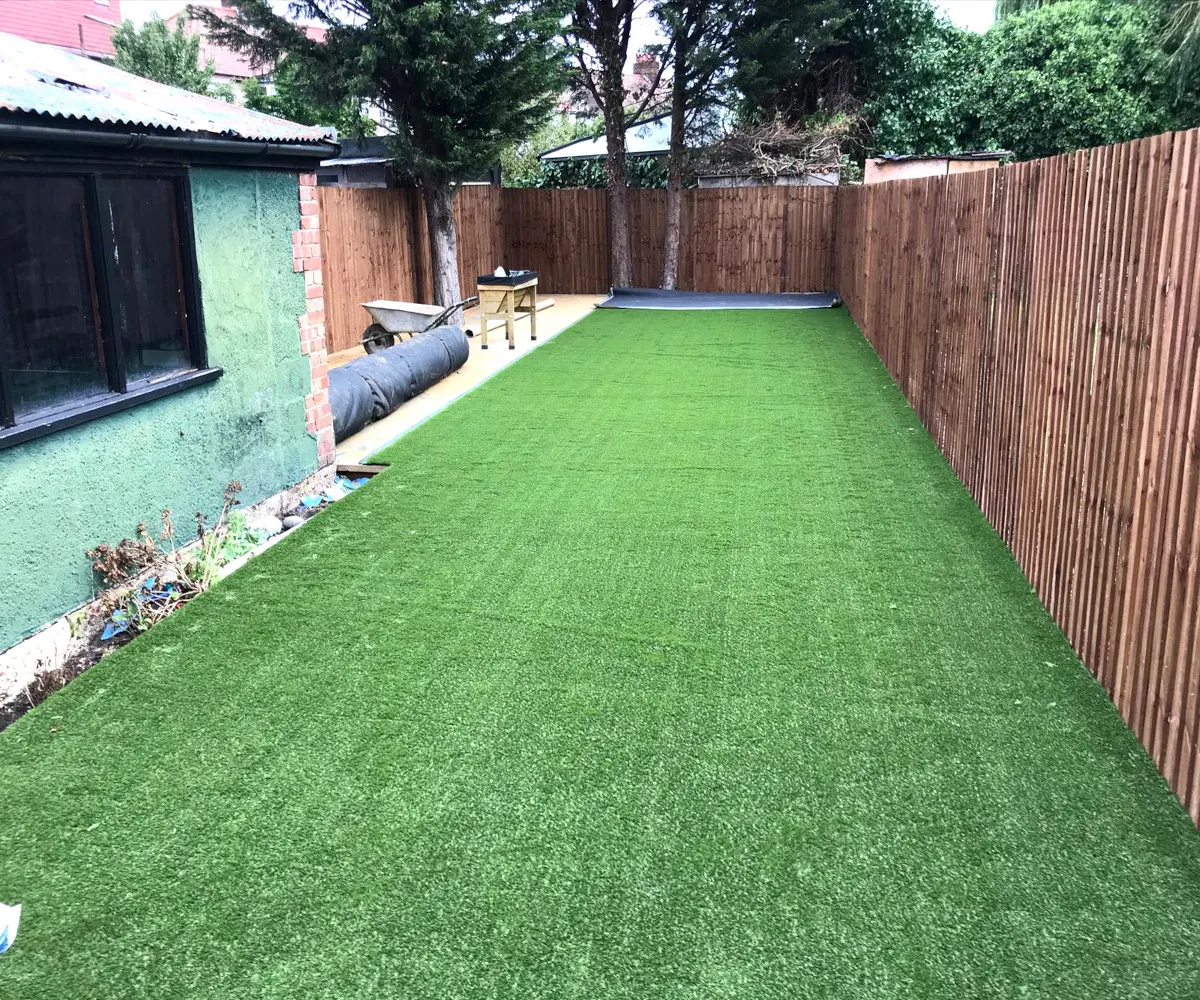
- Artificial grass in London, fully installed: roughly £65 to £110 per square metre, including digging out, sub-base, membrane and edging.
- Ongoing real lawn care: mowing through the growing season, feeding, and aeration once a year.
- Ongoing artificial grass care: brushing, clearing leaves and an occasional wash, mostly done yourself.
Will artificial grass drain on clay soil?
Only if it is installed properly. Artificial grass is permeable, but the clay underneath is not. If the turf is simply laid on flattened soil, water sits underneath and the lawn becomes a sponge.
A good installation on clay removes the topsoil, lays a compacted stone sub-base, often around 75 to 100mm deep, then a layer of fine aggregate, a weed membrane and the grass. On very wet sites, a soakaway or drainage channel may be needed. Most of the cost is in this groundwork, so a very cheap quote usually means corners cut underground.
What are the downsides of artificial grass?
Artificial grass suits many gardens, but it is fair to know the drawbacks before choosing it.
- It gets hot in strong sun, which matters for children's feet and pets.
- It offers nothing for worms, insects or birds, and does not absorb rainwater the way soil does.
- It is plastic, and at the end of its life, often 10 to 20 years, it has to be disposed of.
- Dog owners need to rinse it regularly to avoid smells.
- It cannot be patched as easily as a real lawn if it is damaged.
Can a real lawn work on clay?
Yes, with the right care. Most clay lawns improve noticeably with a few simple habits: hollow tine aeration in autumn, a top dressing of sandy loam brushed into the holes, cutting no shorter than about 4cm, and feeding in spring and autumn. In shady spots, choose a shade tolerant seed or turf mix.
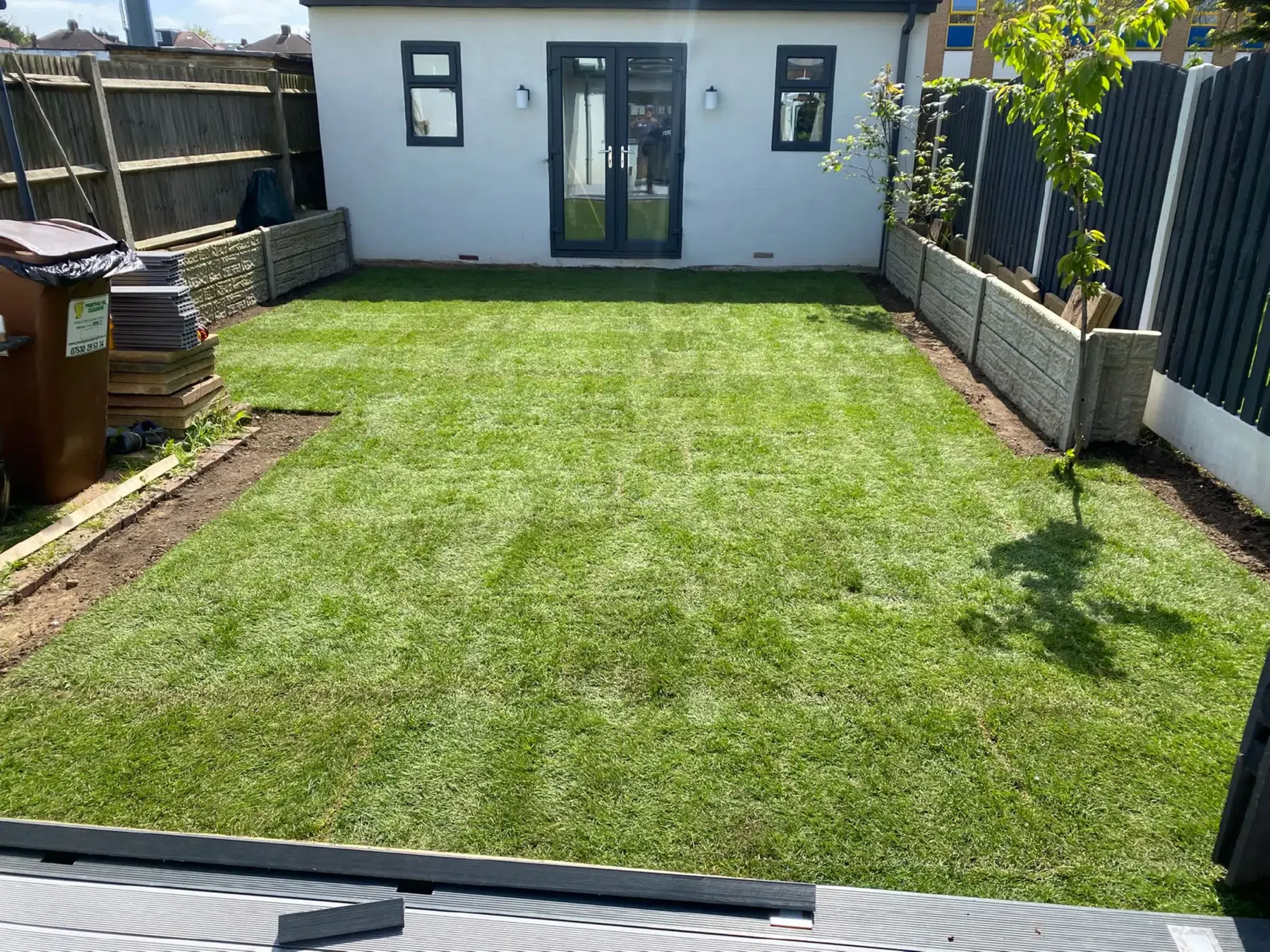
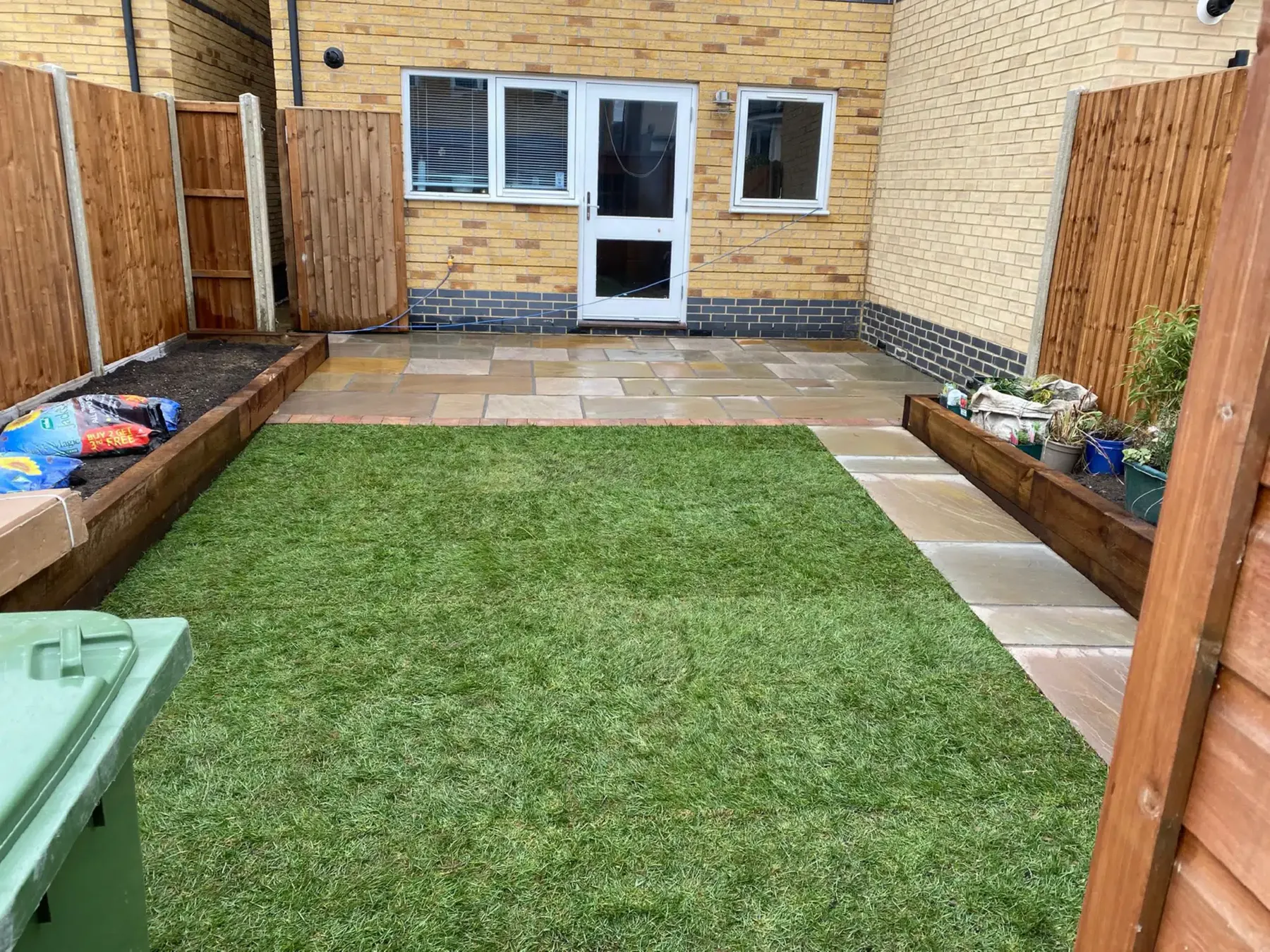
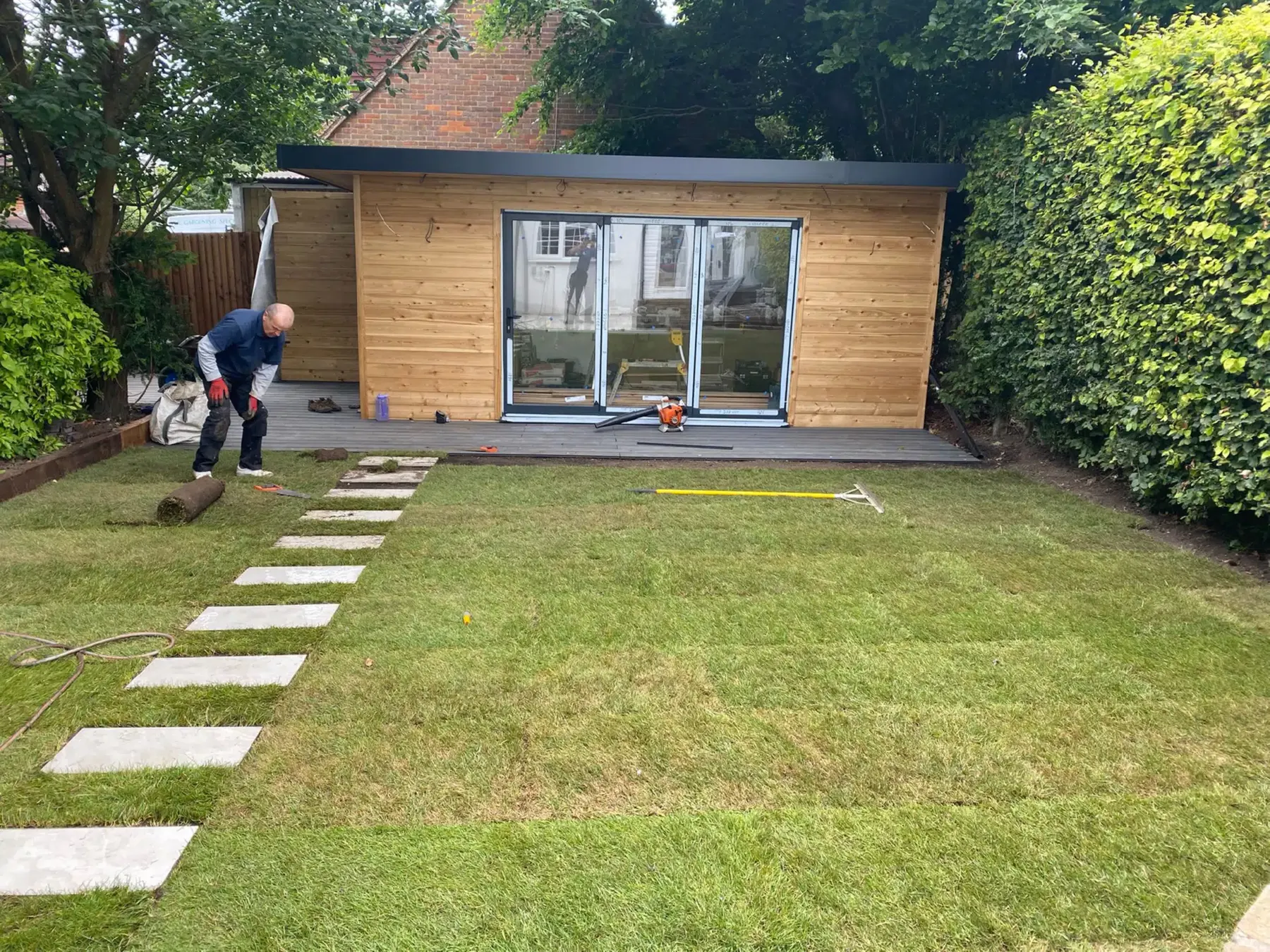
If the lawn is beyond saving, new turf laid on improved soil is a quick reset. You can have a green, usable lawn in a few weeks. Our lawns and turf service covers both renovation and new turf.
Which one should I choose?
Choose artificial grass if the lawn is small, heavily used or very shaded, if mowing has become a struggle, or if you want a green space for grandchildren that is never muddy. It works well in small gardens in Acton or Southall and for balconies and roof terraces.
Choose a real lawn if you have a larger garden, want to support wildlife, prefer a natural feel or have a tighter budget. Many people do both: real lawn in the main garden and artificial grass in a shady corner or play area.
Can I get advice for my own garden?
We install artificial grass and real turf across Ealing, Greenford, Hayes, West Drayton and the rest of West London. We will dig a test hole if needed, check how your soil drains and give you an honest recommendation. Call 07703 040203 to book a free visit.
Questions people ask
Is artificial grass good for clay soil?
It can be, as long as it is installed on a proper drainage base. Clay does not let water through, so the soil must be dug out and replaced with a compacted stone sub-base and fine aggregate. Laid directly on clay, artificial grass will hold water and feel soggy.
How much does artificial grass cost in London?
A typical fully installed price in London in 2026 is around £65 to £110 per square metre. That covers digging out, sub-base, membrane, edging and the grass itself. Small or awkward areas and very wet ground can push the price higher.
How long does artificial grass last?
Good quality artificial grass typically lasts around 10 to 20 years, depending on how much it is used, sun exposure and how well the base was built. Regular brushing and clearing leaves helps it last longer and keeps the pile standing upright.
How can I stop my lawn going muddy in winter?
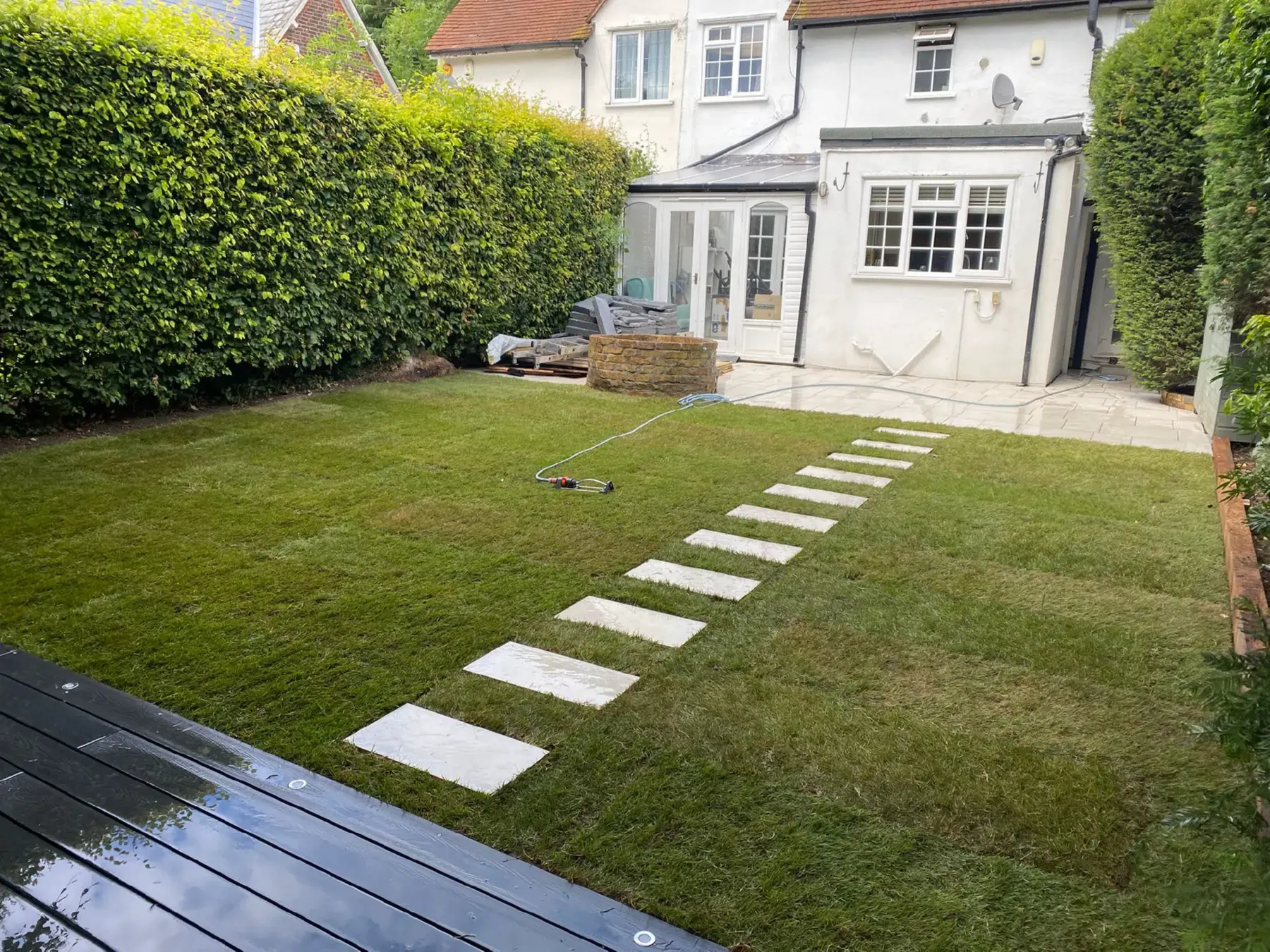
Aerate the lawn every autumn with a hollow tine aerator, brush sandy top dressing into the holes, and avoid walking on it when it is waterlogged. Stepping stones along regular routes help. In very wet spots, drainage or new turf on improved soil may be needed.
Is artificial grass safe for dogs?
Yes, many dog owners use it. Choose a pet friendly grass with good drainage, pick up mess promptly and rinse the area regularly to prevent smells. Bear in mind that artificial grass gets hot in strong sun, so give dogs a shaded spot.
Karol Antolak
Owner of A.K. Gardening Specialist in Northolt. Looking after gardens across West London since 2006. Fully insured, DBS checked.