Why does clay soil matter for a fence?
Much of West London sits on London clay. In Northolt, Greenford, Wembley and Harrow you only need to dig a spade's depth to hit it. Clay holds water in winter and shrinks and cracks in dry summers.
For a fence, that means two things. Timber posts sit in damp ground for months at a time, which is exactly where rot starts. And the ground moves as it wets and dries, which can loosen posts set too shallow. Most fences in this area fail at the post, not the panel.
How long does a timber fence last on clay?
A cheap lap panel fence on timber posts may only last 8 to 12 years in wet clay, sometimes less. The posts rot at ground level, and the first strong wind does the rest.
A properly built closeboard fence lasts much longer. The key details are concrete posts or pressure treated posts rated for ground contact, concrete or timber gravel boards so the boards never touch the soil, and post holes deep enough for the height. Built like that, 15 to 20 years is realistic, with a stain or preserver every few years.
How long does a composite fence last?
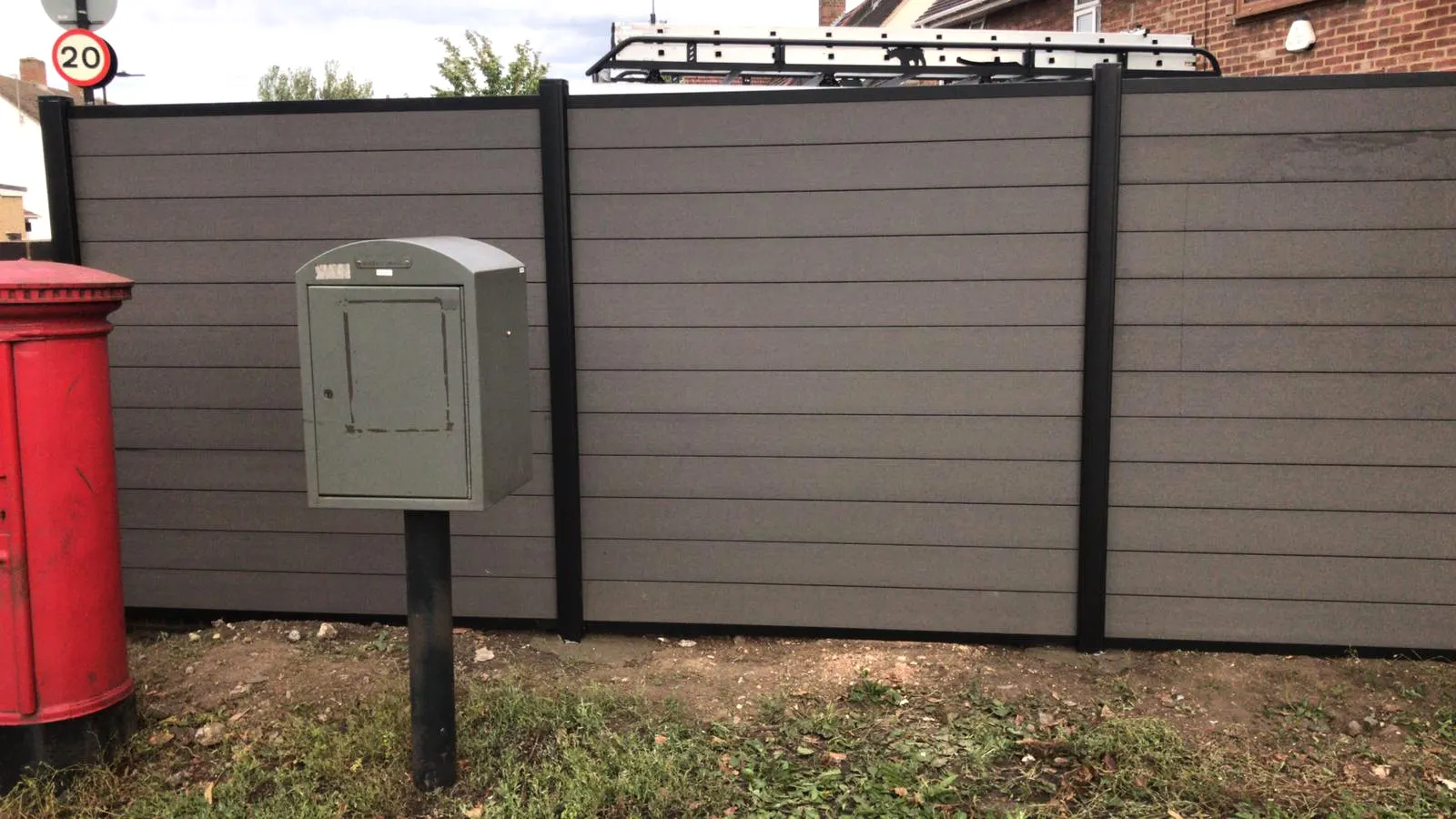
Composite fence boards are made from a mix of wood fibre and recycled plastic. They do not rot, split or need painting. Manufacturers commonly quote 20 to 25 years or more, and many offer long guarantees on the boards.
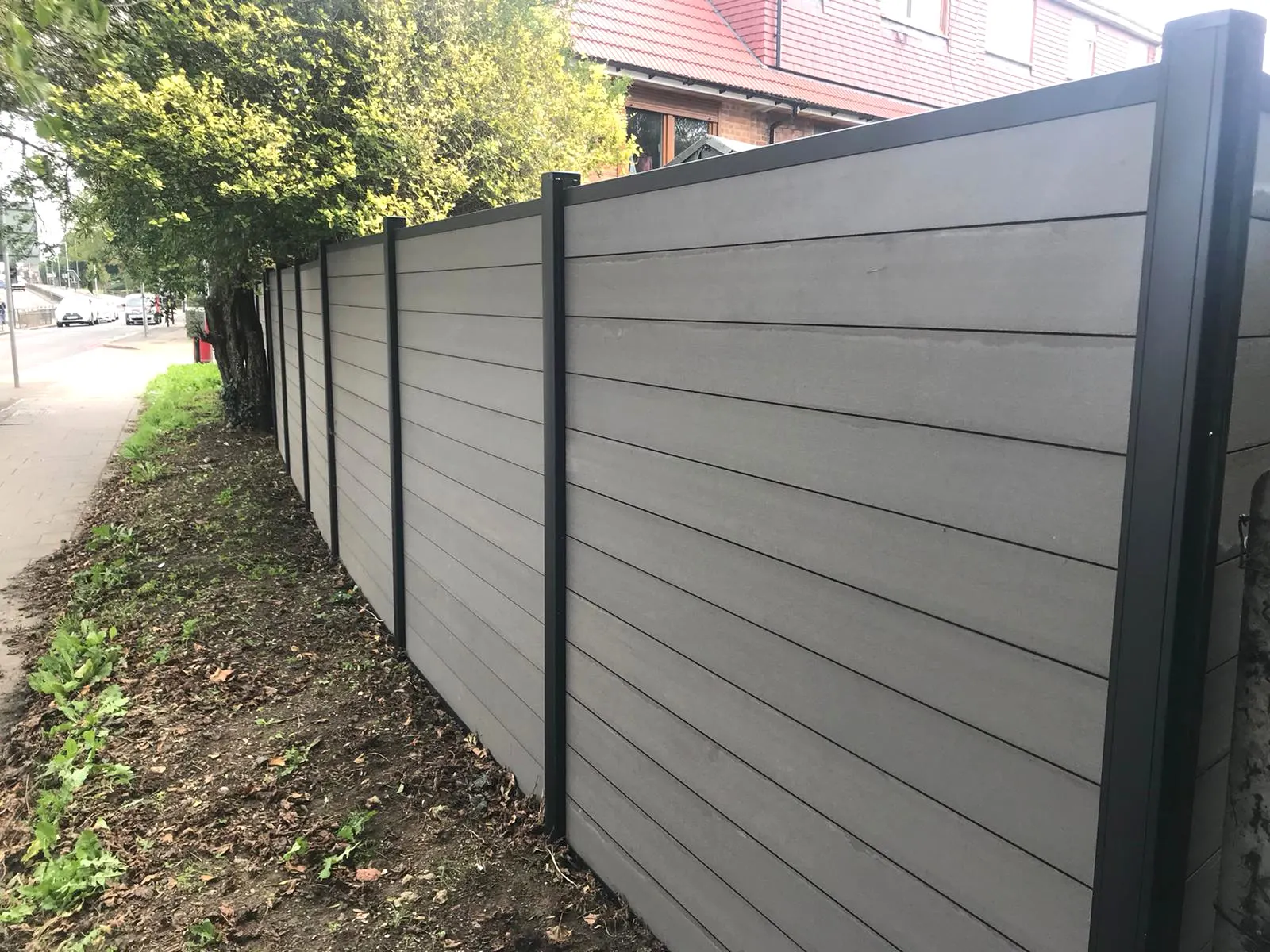
Most composite systems use aluminium or galvanised steel posts set in concrete. Metal does not soften in wet ground, which is why composite suits clay gardens so well. The boards slot into the posts, so a damaged board can be replaced without rebuilding a whole panel.
How do the costs compare in 2026?
These are typical London ranges for a fence around 1.8 metres high, fully installed. Every garden is different, and a free visit gives you a fixed price.
- Lap panel on timber posts: the cheapest option, but the shortest lived on clay.
- Closeboard timber with concrete posts and gravel boards: typically £110 to £160 per metre.
- Composite boards on aluminium or steel posts: typically £120 to £200 per metre, depending on the board quality and colour.
- Extras: removing and disposing of the old fence, difficult access and gates all add to the total.
Which needs less maintenance?
Composite wins clearly. A wash once or twice a year with soapy water keeps it looking new. There is nothing to paint and no splinters.
Timber needs a treatment every two to three years to keep its colour and protect the boards, and the odd board or rail will need replacing over its life. For some people that is part of the charm. For others, especially if you would rather not be up a ladder at 70, it is the deciding factor.
Which looks better?
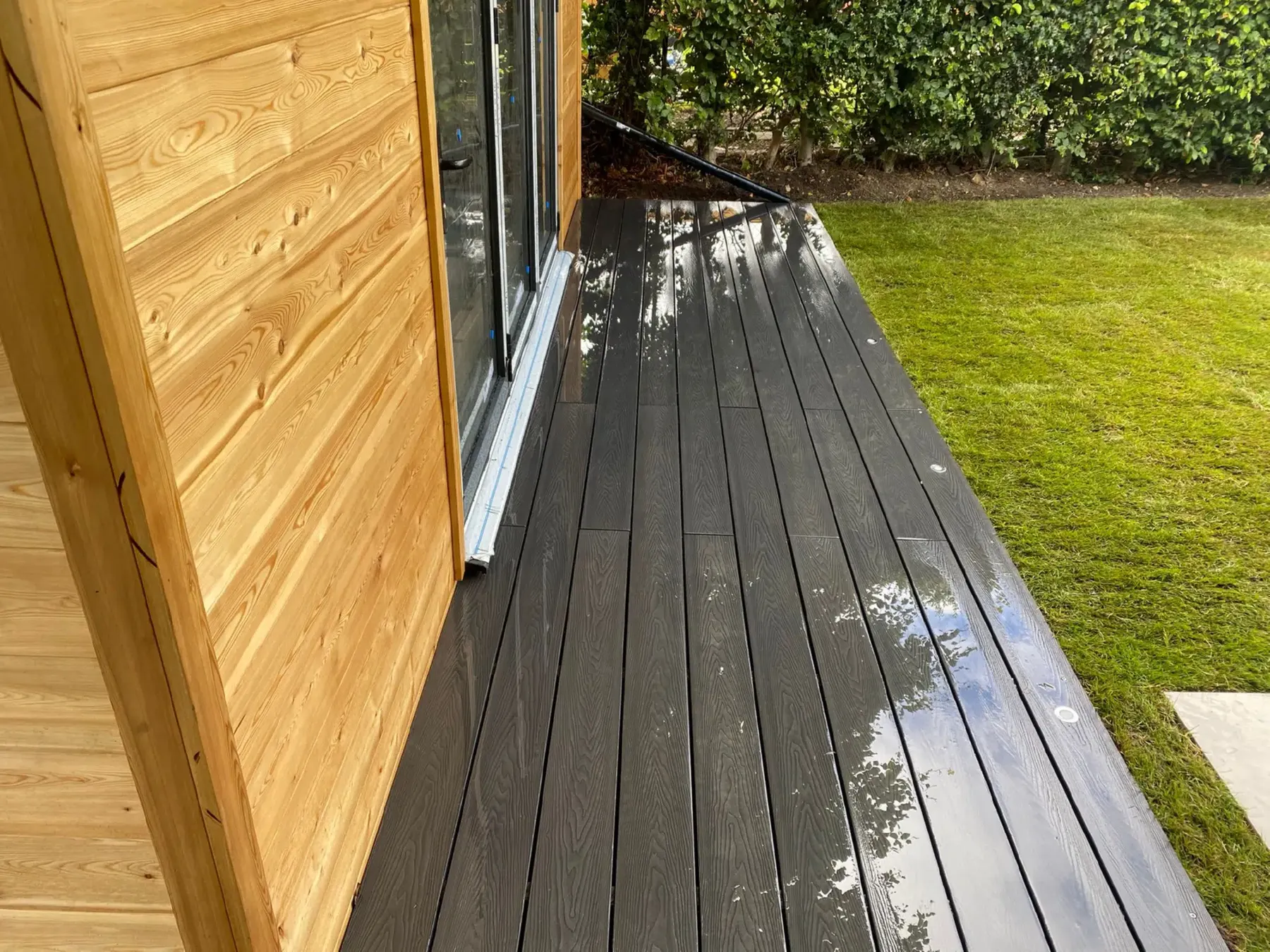
That is a matter of taste. Timber has a natural look, ages to silver if left untreated and suits cottage style and older gardens in Pinner or Eastcote. Composite comes in greys, browns and black, gives a clean modern line and keeps its colour. It pairs well with a porcelain patio or composite decking.
You can also mix them: composite along the back, where the boundary is long and exposed, and timber or a hedge elsewhere.
So which should I choose?
If you plan to stay in your home for many years and want a fence you can forget about, composite on metal posts is the better long term buy on London clay. If budget matters more, or the fence is shared and your neighbour wants timber, a closeboard fence on concrete posts is a sound, honest choice.
What matters most is how it is built. We install both as part of our fencing and gates service across Ealing, Ruislip, Stanmore and the rest of West London. Call 07703 040203 to book a free visit and we will tell you honestly which suits your garden.
Questions people ask
Is composite fencing worth the extra cost?
On clay soil it often is. Composite boards on metal posts do not rot, need no painting and commonly last 20 to 25 years or more. A timber fence costs less to install but needs treating every few years and its posts are more likely to fail in wet ground.
Why do fence posts rot so quickly in London?
Much of West London is on London clay, which holds water through autumn and winter. Timber posts sitting in damp clay rot at ground level first. Concrete or metal posts, plus gravel boards that keep boards off the soil, avoid most of the problem.
How much does composite fencing cost per metre in London?
Typical 2026 prices for composite fencing in London, fully installed at about 1.8 metres high, range from roughly £120 to £200 per metre. Board quality, post type, access and removing an old fence all affect the final figure.
Can composite fencing blow down in a storm?
Any fence can fail in extreme wind, but a composite fence on aluminium or steel posts set in concrete is very strong. Because the posts do not rot, they keep their strength for many years, which is where older timber fences tend to give way.
Does a composite fence need planning permission?
The same rules apply as for timber. You can usually build up to 2 metres high in a back garden, or 1 metre next to a road used by vehicles, without planning permission. Listed buildings and some conservation areas have extra restrictions.
Karol Antolak
Owner of A.K. Gardening Specialist in Northolt. Looking after gardens across West London since 2006. Fully insured, DBS checked.