What should I do first when a fence blows down?
Do not rush to lift heavy panels in high wind. Wait until the storm has passed, then work through these steps.
- Keep children and pets away from loose panels and broken posts with sharp edges or nails.
- Take clear photos from both sides if you can, including the base of the posts. Insurers and neighbours will both want to see them.
- Lay loose panels flat on the ground so they cannot catch the wind again.
- If a panel has fallen onto a pavement or road, move it or tell the council, as it could be a hazard.
- Speak to your neighbour early. Most fence disputes start because one side felt left out.
Who owns the fence between me and my neighbour?
There is no general rule in England that you own the fence on your left, or that the good side must face your neighbour. Those are common myths. Ownership depends on your property's legal documents.
Check your title deeds and the title plan from HM Land Registry. Some show a T mark on one side of a boundary line, which points to the owner responsible for it. An H mark or two Ts usually means the boundary is shared. Many older houses in Northolt, Hanwell and Perivale have no marks at all, in which case it comes down to agreement and history.
If nobody can show ownership, the most practical answer is often to split the cost. Get that agreement in writing, even a simple email.
Will my home insurance pay for a storm-damaged fence?
It depends on your policy, so read the wording carefully. Many buildings insurance policies exclude fences, gates and hedges from storm damage, or only cover them if a wall or building is damaged at the same time. Some cover them in full.
Insurers also look at whether the fence was already in poor condition. Posts that had rotted at ground level are often treated as wear and tear rather than storm damage. This is why the photos of the post bases matter.
If you are going to claim, ring your insurer before any repair work beyond making things safe. Ask whether they need a written quote, and keep the receipts for any temporary fix.
How can I make a fence safe until it is replaced?
A temporary fix is about safety and privacy for a few weeks, not a permanent repair. Leaning posts can be propped with timber struts screwed to the post and pegged into the ground. Loose panels can be screwed back to sound posts with brackets. Where a gap must stay closed for a dog or for security, a temporary mesh panel or a sheet of exterior board works.
Do not reconcrete a broken timber post in the same hole and hope for the best. On London clay, the ground often holds water around old concrete and the new post will fail again.
Should I replace it with timber or composite?
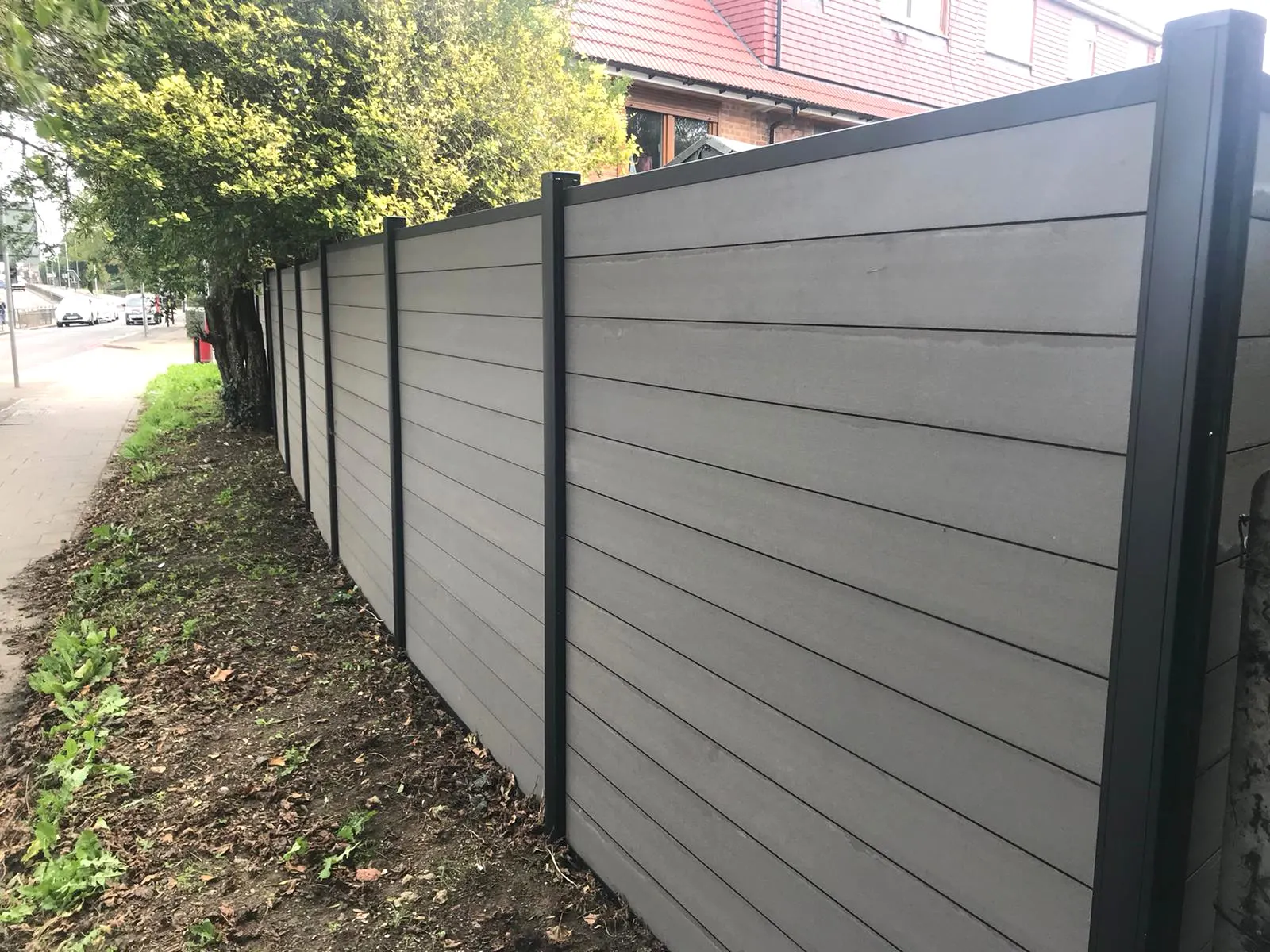
This is the right moment to think about it, because the posts are coming out anyway. Typical London prices for 2026 run at roughly £110 to £160 per metre for a closeboard timber fence with concrete posts and gravel boards, and roughly £120 to £200 per metre for composite boards with aluminium or steel posts. Every site is different, so treat these as typical figures only.
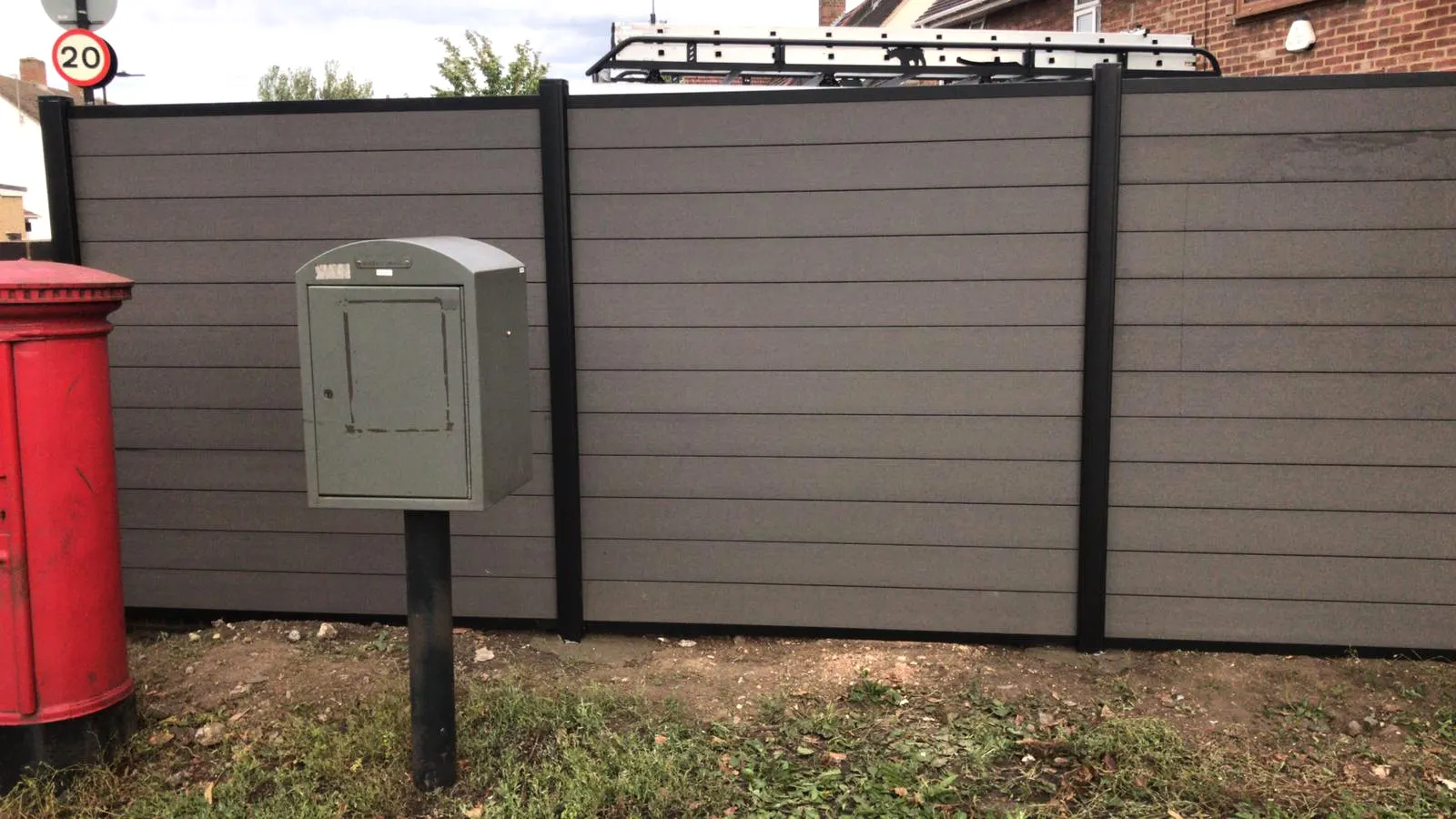
Timber is cheaper up front and easy to repair panel by panel. Composite costs more but does not rot or need painting, and the metal posts do not suffer from wet clay. We compare the two in detail in our separate guide to composite vs timber fencing on London clay.
Do I need permission to put up a new fence?
Most replacement fences do not need planning permission. Under permitted development rules you can usually build a fence up to 2 metres high, or up to 1 metre high where it is next to a road or a footpath alongside a road used by vehicles. Listed buildings, some conservation areas and estates with Article 4 directions have extra rules, so check with your council if you live in one.
A timber or composite fence is not normally covered by the Party Wall Act, which applies to masonry walls. Good manners still apply: tell your neighbour when the work is happening and agree who has access to which side.
How quickly can a fence be replaced after a storm?
After a big storm, every fencer in London gets busy at once. Book a visit early, even if you are waiting on an insurer. We cover Greenford, Ealing, Ruislip, Harrow and the rest of West London, and our fencing and gates work includes timber, composite and aluminium. Call 07703 040203 for a free visit and a written quote you can pass to your insurer.
Questions people ask
Who is responsible for a fence that blows down?
The owner of the fence is responsible, and in England ownership is set by the title deeds, not by which side the fence is on. Check your HM Land Registry title plan for T marks. If ownership is unclear, neighbours often agree to share the cost of replacing it.
Does home insurance cover fences damaged in a storm?
Some policies do, but many buildings policies exclude fences and gates from storm cover, or refuse claims where posts were already rotten. Read your policy wording, photograph the damage including the post bases, and call your insurer before arranging a permanent repair.
Can I put up a 2 metre fence without planning permission?
Usually yes. Permitted development allows fences up to 2 metres high in most back gardens, or 1 metre next to a road used by vehicles. Listed buildings, some conservation areas and properties with Article 4 directions have stricter rules, so check with your council first.
How do I stop a fence blowing down again?
Use stronger posts and make sure they are set properly. Concrete posts with gravel boards or metal posts with composite boards resist wind far better than ageing timber posts. On clay soil, good drainage round the post footings also stops the ground loosening.
How much does it cost to replace a fence in London?
Typical 2026 London figures are around £110 to £160 per metre for closeboard timber with concrete posts, and £120 to £200 per metre for composite. Length, access, removing the old fence and ground conditions all change the price, so a site visit gives the real figure.
Karol Antolak
Owner of A.K. Gardening Specialist in Northolt. Looking after gardens across West London since 2006. Fully insured, DBS checked.