What does it cost to remove a tree in London?
Every tree is priced after someone has seen it, but these are the typical market ranges for London in 2026. They are higher than national averages, because access, parking and waste disposal all cost more in the capital.
- Small tree (up to about 5m): around £300 to £700. Fruit trees, small conifers, self-seeded sycamores.
- Medium tree (about 5m to 10m): around £700 to £1,500. Most trees in a typical West London back garden.
- Large tree (over 10m), or any tree close to a house: around £1,500 to £3,500 or more, because it has to be taken down piece by piece.
- Stump grinding: usually £150 to £400 on top, depending on the size of the stump and how easy it is to reach.
A real job: a large tree behind a terraced house
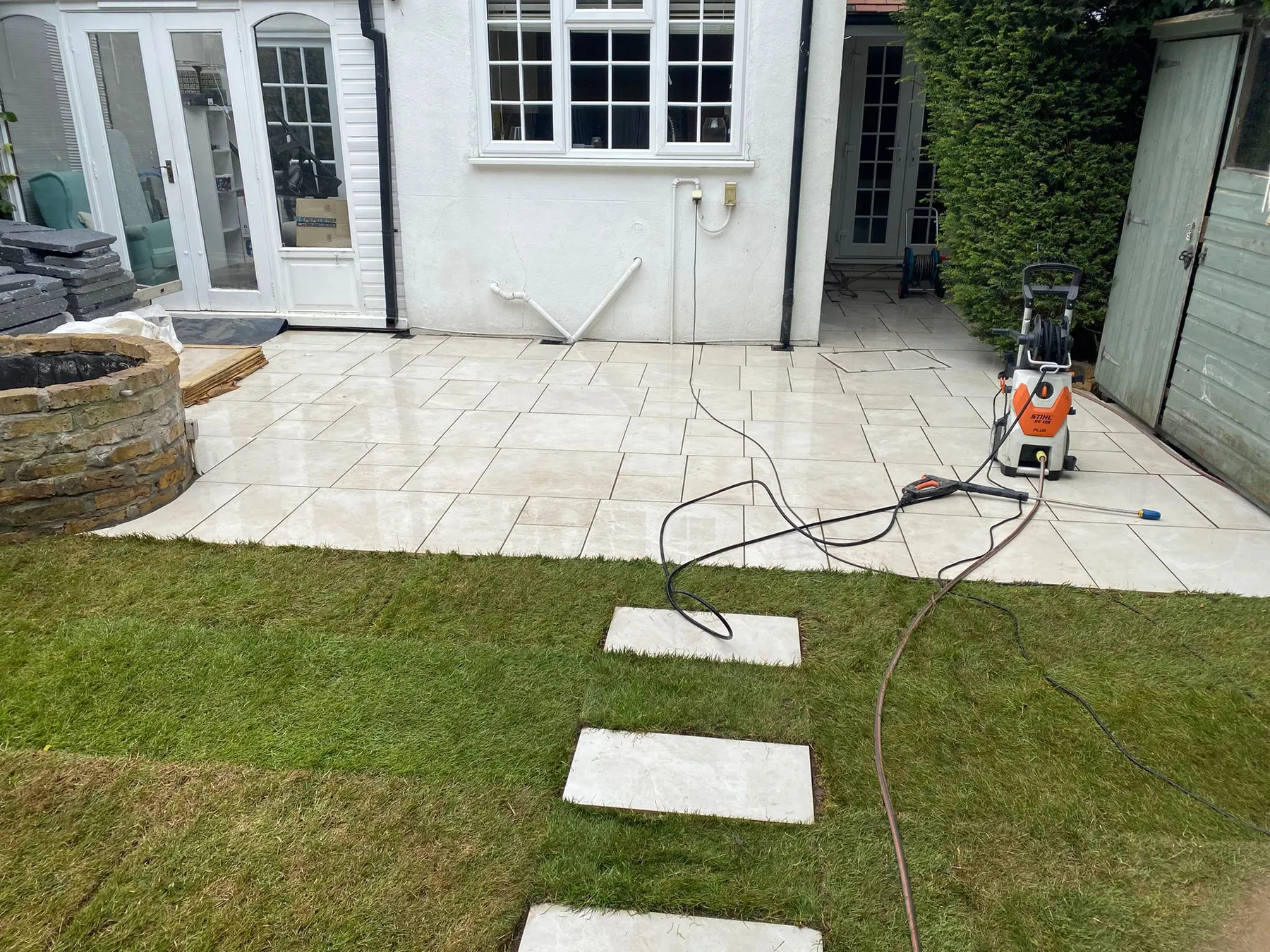
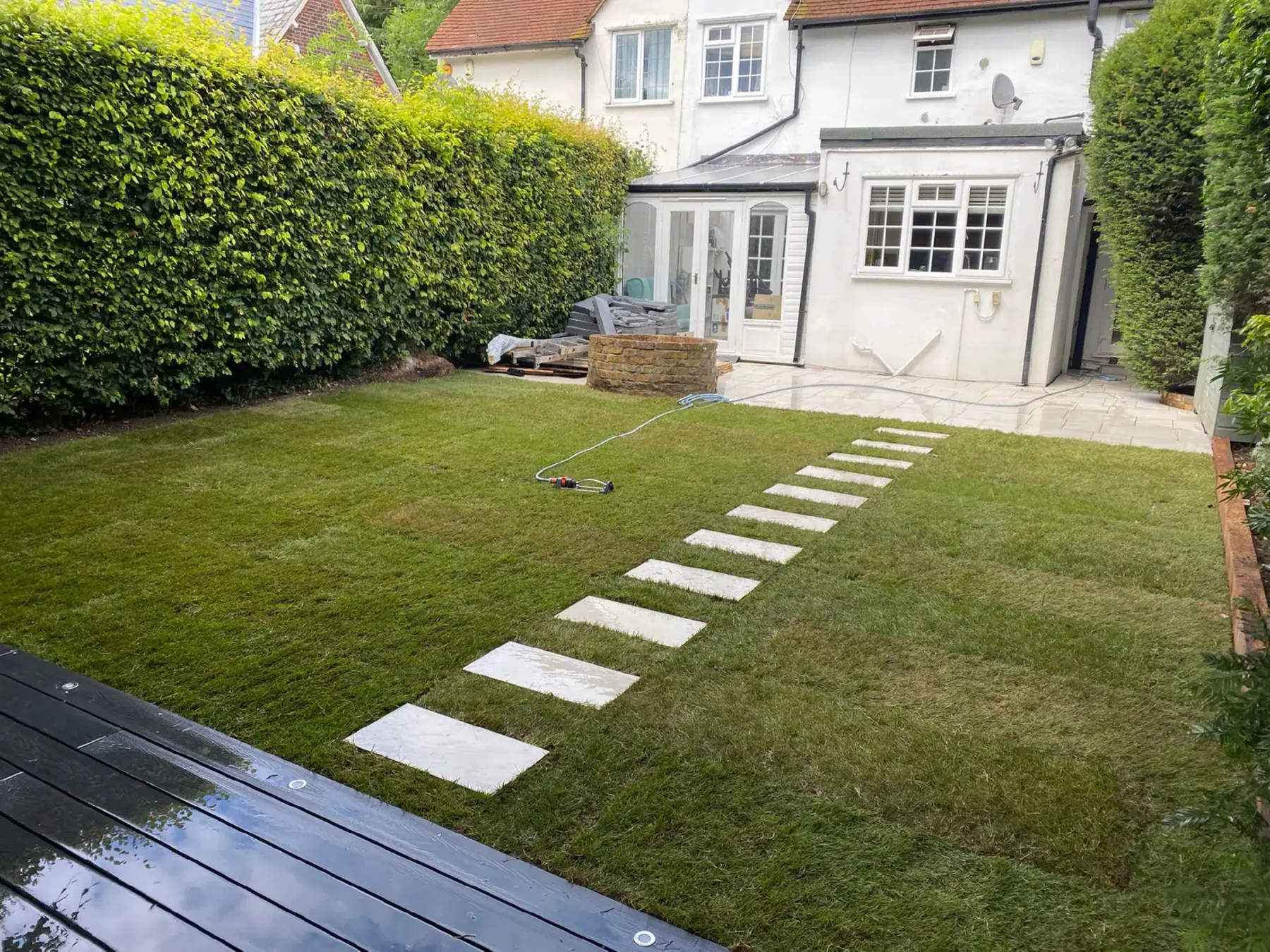
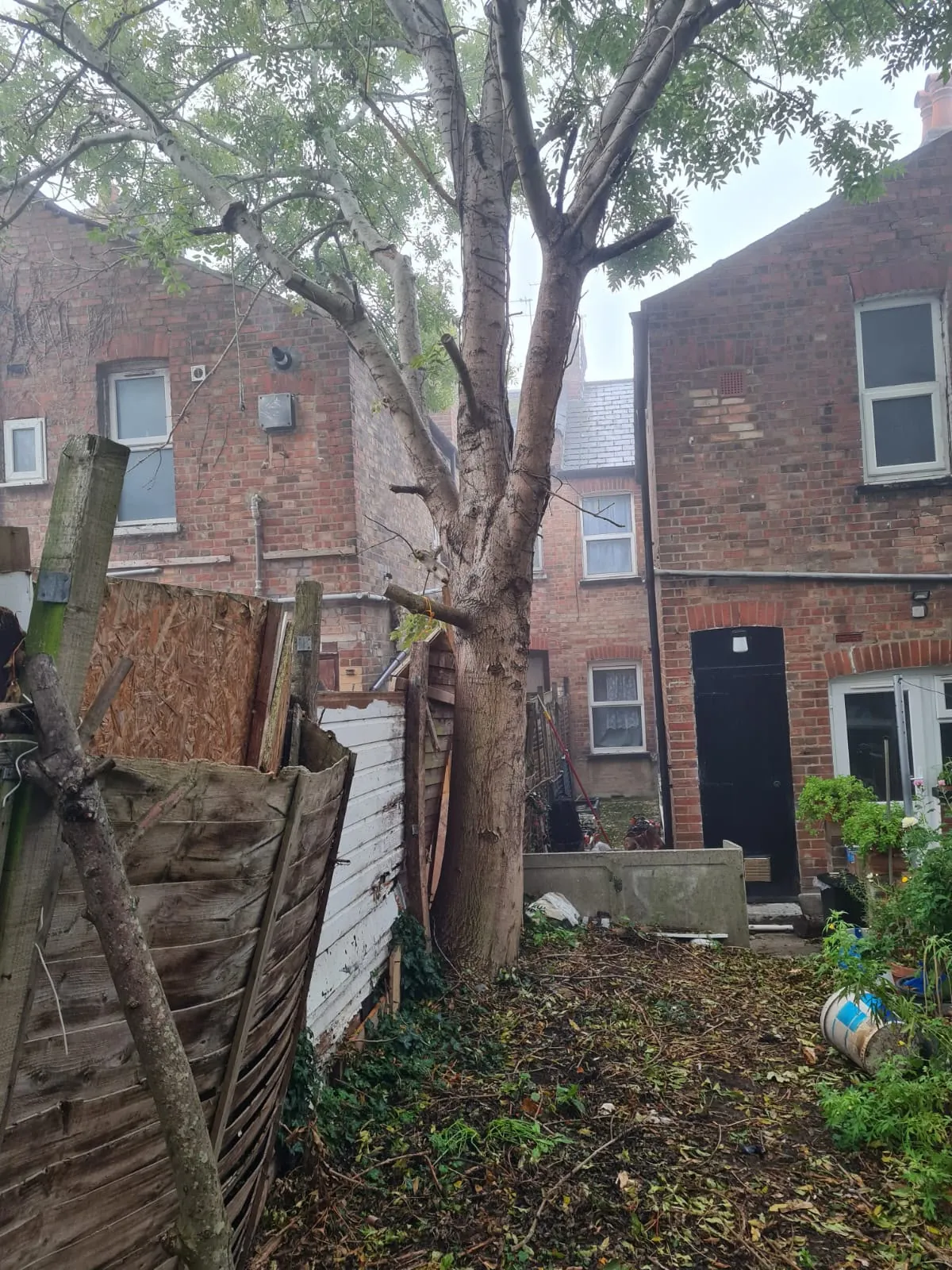
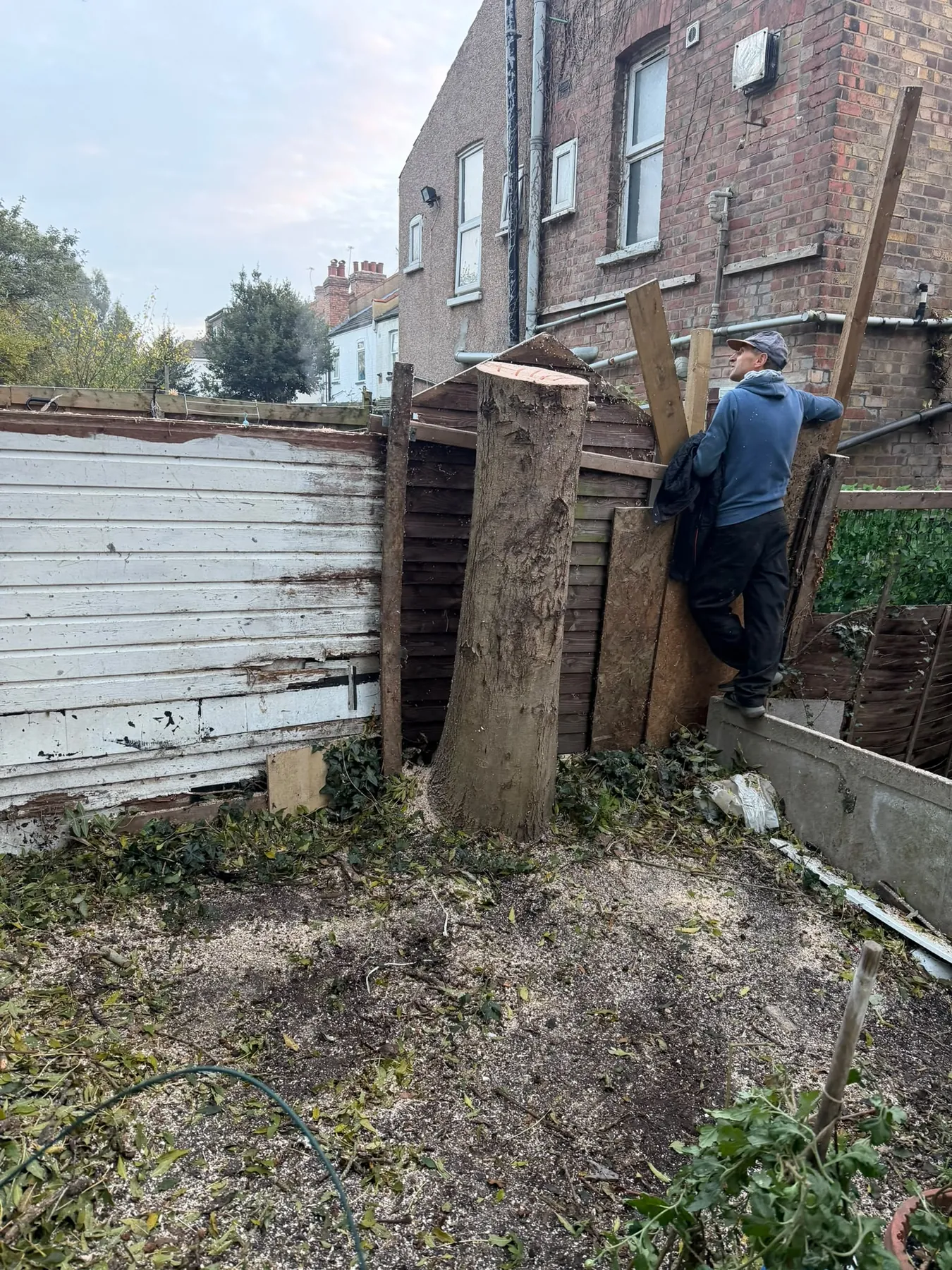
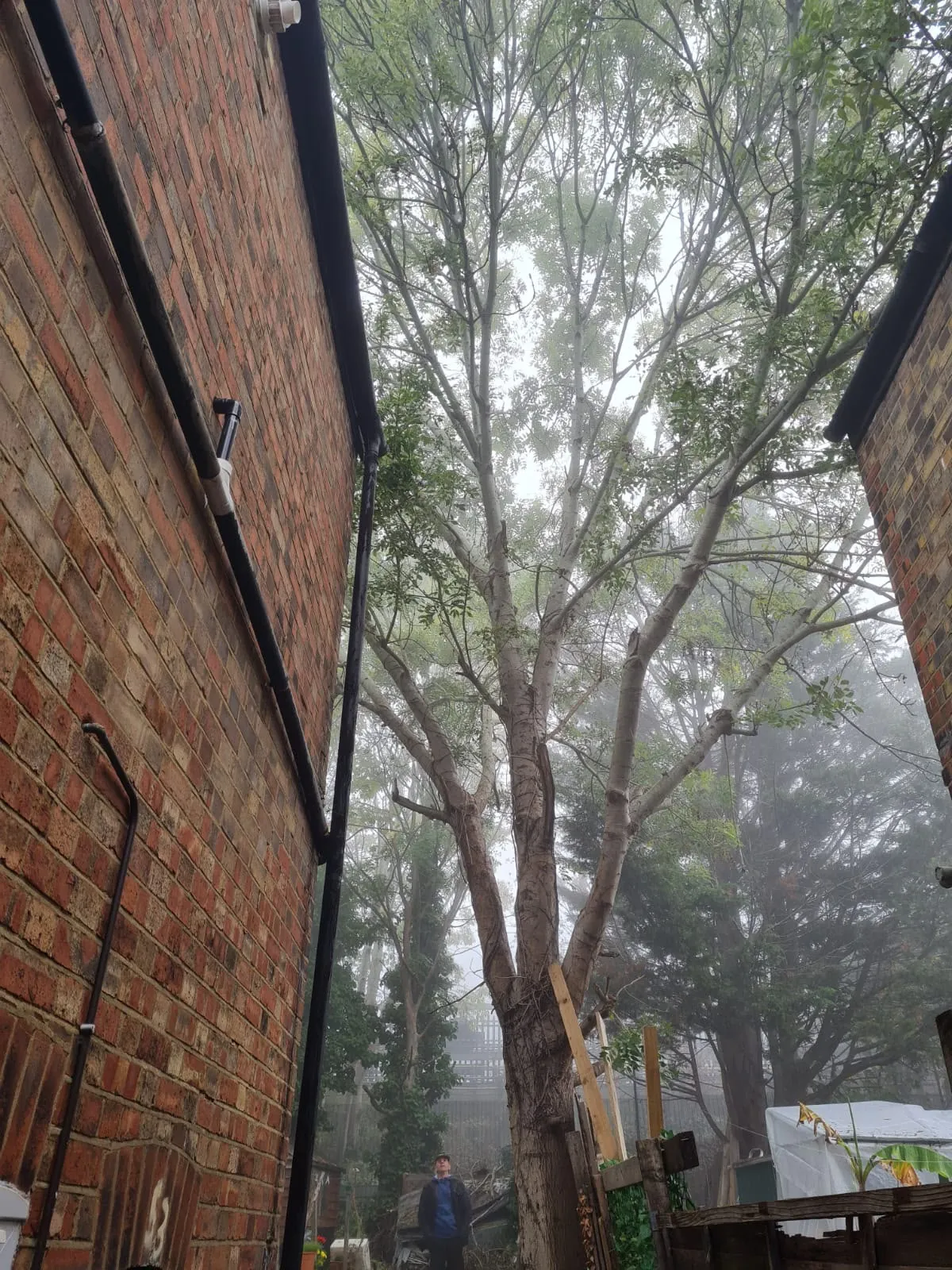
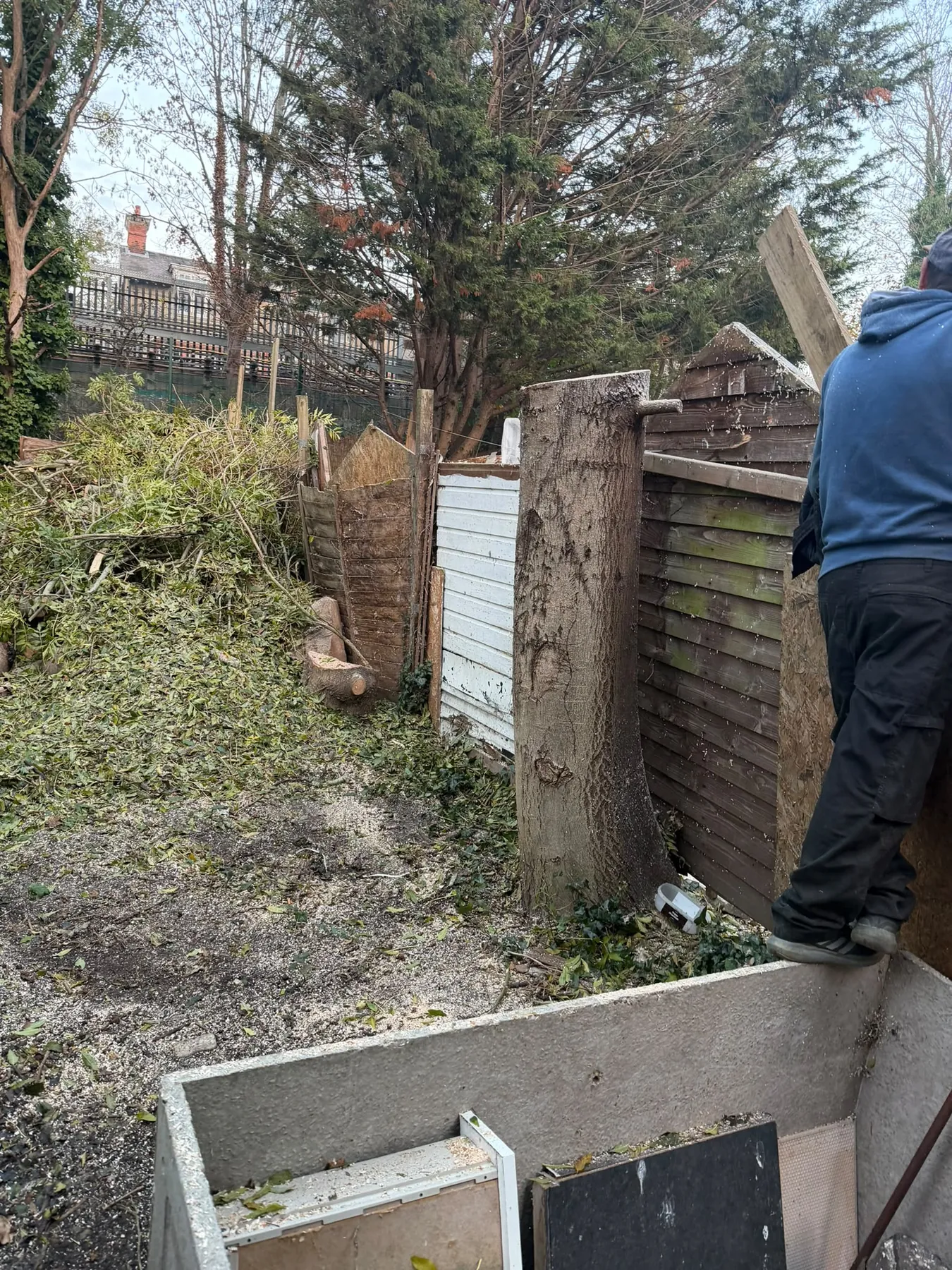
In November 2026 we took down a tall tree in a terraced back garden in West London. It had grown right up against the back extension. Its branches hung over the roof and gutters, it dropped leaves into the drains every autumn and it kept the whole garden in shade.
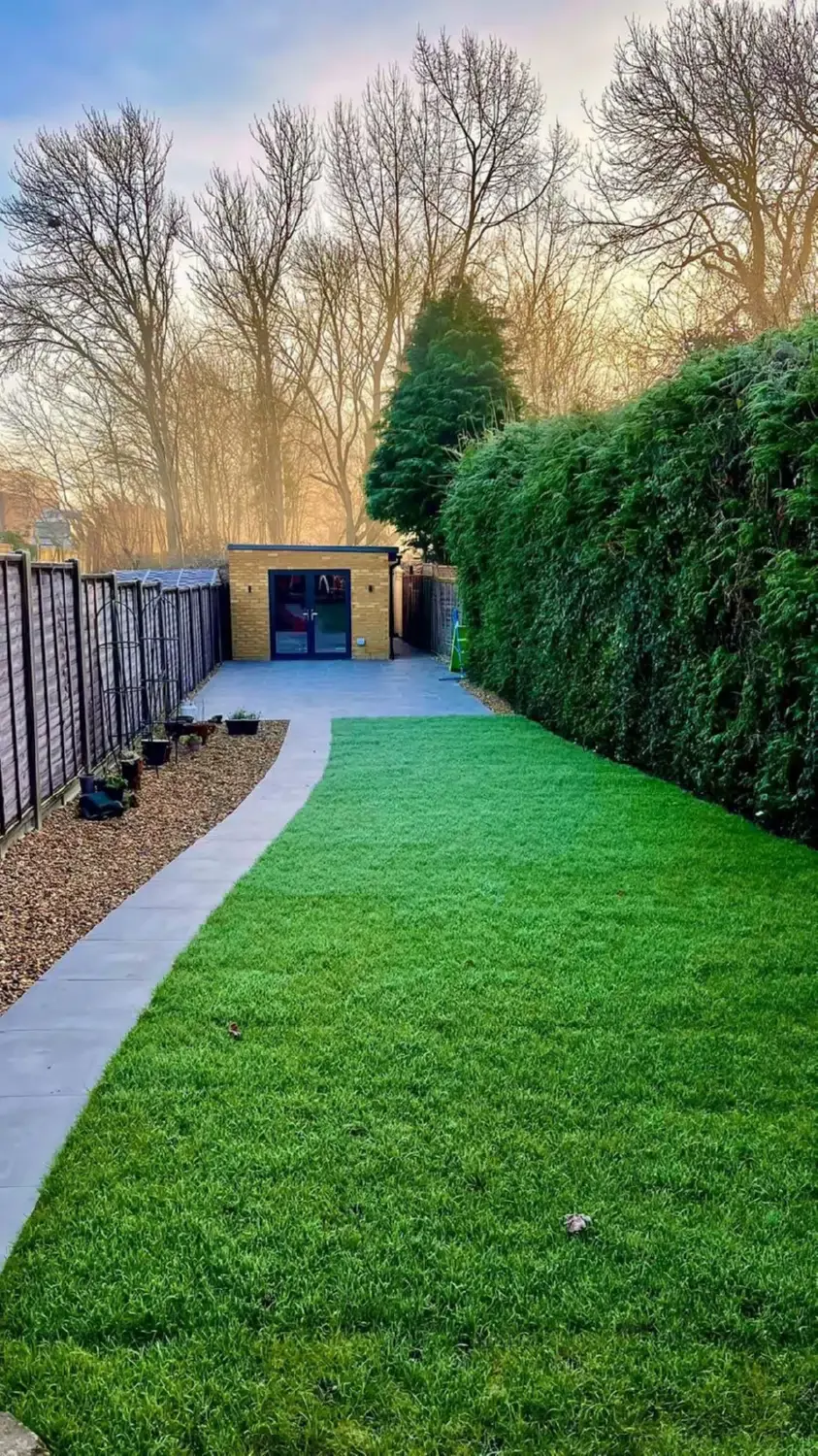
There was no side access and there were houses on every side, so felling it in one piece was never an option. We took the crown down in small sections, lowering each piece away from the roof, then cut the trunk down to a low stump by the fence and cleared every branch and leaf from the garden. You can see more photos of this job on our work page.
What makes tree removal more or less expensive?
Two trees of the same height can be priced very differently. These are the things that move the price most.
- Distance from the house: a tree that can be dropped in one go across an open lawn is quick. A tree over a roof, a conservatory or a neighbour's shed has to come down in sections.
- Access: in many terraced houses in Ealing, Acton or Southall every branch and log has to be carried through the house.
- Waste: taking away the wood and branches is a big part of the price. Ask whether it is included.
- Stump: leaving a low stump is cheapest. Grinding it out below ground level costs extra but lets you lay turf or paving over the spot.
- Condition of the tree: dead or rotten wood can be unpredictable and needs more care to take down safely.
Do I need permission to remove a tree in my garden?
Most garden trees can be removed without permission, but two cases need the council first.
Tree Preservation Order (TPO): if the tree is protected, you must apply to the council for consent before cutting it down or doing major pruning. Work without consent can lead to a large fine.
Conservation area: if you live in a conservation area, you must give the council six weeks' written notice (a Section 211 notice) before working on any tree with a trunk over 7.5cm across, measured 1.5m above the ground. This gives the council time to decide whether to protect it.
Ealing, Hillingdon and Harrow councils all have maps of protected trees and conservation areas. We check before we cut, and we can help you with the notice.
When is the best time of year to remove a tree?
Autumn and winter are usually the best time. The leaves are down or falling, so it is easier to see the shape of the tree and there is less waste to take away. Gardens are also quieter, and borders and lawns suffer less damage.
In spring and summer you have to check for nesting birds. Under the Wildlife and Countryside Act 1981 it is an offence to damage or destroy an active nest, and the main nesting season runs from around March to August. Work can still go ahead, but only after a careful check.
Should I remove a large tree close to my house?
Not always, and not without thinking about the ground. Much of West London sits on London clay, which shrinks when trees draw water out of it and swells again when they are gone. Removing a large, mature tree right next to an older house can occasionally cause the ground to swell (called heave).
For a big tree very close to the house, or where there are already cracks, it is worth asking a structural engineer or your insurer before it comes down. For smaller and medium trees in an ordinary back garden, this is rarely a problem. Sometimes a reduction, where we take the crown down by a third, is enough to bring back the light without removing the tree.
What should a tree removal quote include?
A good quote is written down and tells you exactly what you are paying for.
- How the tree will come down (felled in one go or in sections)
- Whether the wood, branches and leaves are taken away
- Whether the stump is left, cut low or ground out
- Who checks for a TPO or conservation area
- Proof of public liability insurance
Questions people ask
How long does it take to remove a tree?
A small tree usually takes a couple of hours. A medium or large tree in a back garden with no side access often takes a full day for a small team, including clearing the waste.
Can I cut down a tree in my garden without permission?
Usually yes, unless the tree has a Tree Preservation Order or you live in a conservation area. In a conservation area you must give the council six weeks' notice for trees with a trunk over 7.5cm across at 1.5m high.
Is stump grinding included in tree removal?
Often not. Many quotes leave a low stump. Grinding it out below ground usually costs £150 to £400 extra in London, depending on its size and access.
Can I cut back branches from my neighbour's tree?
You can usually cut branches that hang over your side, back to the boundary line, as long as the tree is not protected. It is polite to talk to your neighbour first and offer them the cuttings.
Do you remove trees in Northolt and Ealing?
Yes. We take down and reduce trees in back gardens across Northolt, Greenford, Ealing, Harrow, Ruislip and the rest of West London, and we check for protected trees before we cut.
Karol Antolak
Owner of A.K. Gardening Specialist in Northolt. Looking after gardens across West London since 2006. Fully insured, DBS checked.